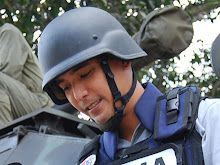
For ordinary Filipinos the huge US Missle Destroyers anchored at Puerto Princesa is seem like Uncle Sam coming to the aid of Juan dela Cruz. At first glance, it does seem like the US had made the decision to provide operational support to the Philippines in the simmering row over the Spratlys. Throw in the subtle rhetoric from the US State department and you have the illusion of strong US support over the dispute.
But then thats what it really is. An illusion. An attractive and useful one at that for both the US and the PHL. On one end, it provides hope for the majority of Filipinos having to confront the reality of their military's incapacity to protect the country's territorial claims. More importantly it diminishes pressure on the current administration to do something over the reports of encroachment, harrassment and outright arrogance of both the Vietnamese and Chinese Navy in the area.
For the United States, the exercises have the colloraly perception that it is indeed fulfilling its obligations as a treaty ally.
Sadly the CARAT exercises which have been held annually since the mid 1990's is nothing more than a thinly veiled excuse to ensure US Forces in the region are ready for any eventuality. In the simplest of terms it means the US want to keep their military doing all manners of drills and shuttling their military hardware across the region rather than have their sailors and marines getting fat and lazy in their major bases in Okinawa and Hawaii.
While covering the non essential facets of the exercise in Palawan this month, I noticed both the Americans and the Philippine military bending over backward just to make it painfully clear that the activities had absolutely no relation to the brewing tensions over the Spratlys.
Someone inside the military told me, the US doesnt even want video or pictures of US and PHL troops operating side by side with firearms to be shown in tv or newspaper reports. The US is taking exceptional care not to ruffle the feathers of China or the other belligerent claimnant Vietnam.
Most importantly, that portion of the exercise where both US Navy Missle Destroyers will be conducting maneuvers with aging PHL Navy ships is strictly off-limits to media. My source say this was a specific condition laid down by their US counterparts.
Lt Commander Mike Morley of the US Navy who acts as spokesman for the US side explains it is their policy not to have media cover the at-sea phase to avoid the responsibility of having civilians around during the naval drills.
That the media people will be onboard the PHL Navy ships and not the US vessels make little difference in light of this policy.
Which ofcourse is entirely consistent with US military policy when they embed media in similar dangerous situations like say the invasion of Iraq, the first gulf war and the conquest of Afghanistan.
As I told Morley over dinner one night "Its your job to state the official facts and it is medias job to try and read between the lies..err the lines."
As for the much publicized claim of extensive oil deposits in the region, it is hard to believe that a nation willing to go to war with two countries like Afghanizstan and Iraq to secure oil reserves would overlook such a thing sitting under their noses for the greater part of the 21st century. Chances are they have already looked and have either found out that there is none or if there is, it is much to deep underground to be of any commercial interest.
Monday, July 18, 2011
Monday, July 11, 2011
A trip to Japan
GMA News reporter Chino Gaston and cameraman Melchor Quintos made it to Japan’s most devastated city. Gaston reports that amid the disaster, the Japanese are exhibiting awe-inspiring calm and discipline. Their van running low on gas, Chino Gaston made a desperate suggestion to his Japanese driver, whose reply made the Filipino feel ashamed.
We reached tsunami-devastated Sendai in northeastern Japan with only the clothes on our backs and the small supply of water we carried in our day packs.
Our GMA News team had joined a Philippine consulate team sent to Sendai to check on the Filipinos there. We had arrived in Tokyo on March 13 with full provisions, but as we waited at the Philippine embassy that same day to interview the ambassador, we received a sudden invitation to join the government team about to leave for the site of devastation. Hence, there was no time to pick up our provisions.
Like many others in Japan, we had to rely on the generosity of strangers to get us through the bitter-cold days and nights.
Our convoy was allowed to pass through the otherwise closed Tohoku Expressway linking Tokyo with Sendai. It had been closed for the past few days due to the explosion at Fukushima's nuclear power plant which was a scant 50 kilometers away from the area where the expressway passed through Fukushima.
Upon entering Sendai, the bright lights and demeanor of people walking through the streets seemed a stark contrast to the images shown on TV of a tsunami-ravaged coastline and rescuers combing through the muddy ruins of the city.
chinofoto2
PHL Embassy team in Japan meets with Filipino evacuees at a relief center in Takomachi Elementary School in Sendai City on Monday. Chino Gaston
Our driver Tosho-san quickly explained that we were in Sendai's central district up in the mountains and that we were still five minutes from the coastal destruction.
A trip to the grocery however revealed the harsh reality here. Most shops were already closed and the ones that remained open were rationing what they sold to each person.
There have been no reports that Filipinos had perished in the tsunami. But the embassy staff have only gotten in touch with less than a hundred of the estimated 1500 Filipinos living in Miyagi Prefecture, where Sendai City is the main population center.
We found added solace in the warmth and kindness of our fellow Filipinos living in Sendai, many of them women married to Japanese. Despite the uncertainty they faced, our kababayan welcomed journalists and embassy staff to their homes and shared their limited water and food.
While some wanted to be evacuated to Tokyo for fear of another earthquake and possible radiation exposure from the damaged Fukushima nuclear plant, most wanted to stay and be with their Japanese spouses.
Not a single Japanese we met was even considering leaving Sendai.
Mud and debris litter the airport in Sendai City, four days after the quake and tsunami. Chino Gaston
Lining up for supplies in front of a department store, I could not help but admire the composure and discipline of the Japanese. Those I interviewed admitted they were worried and that the situation was indeed dire, but they remained polite and willing to answer questions from a nosy journalist.
One young man was waiting in line with his sister and told me he was going inside the department store to buy whatever was still being sold.
Elsewhere, Japanese students were giving away free onigiri, or rice balls, as well as miso soup to people in evacuation centers. Outside, kids were sweeping the grounds and picking up litter and debris from the earthquake.
Even inside the devastated Sendai International Airport where cars, planes and buildings had been strewn about like toys, there was no sign of looting. People using the terminal as a shelter did not even touch the food and water inside the many food shops that had been abandoned.
Since the supply of fuel was severely limited and difficult to purchase, I innocently asked our driver Tosho-san if there was a possibility of siphoning fuel from the wrecked vehicles strewn all over the coast.
japanline
Despite their desperation, Japanese residents of tsunami-devastated Sendai calmly line up for food and relief supplies. Chino Gaston
His answer made me feel ashamed. Tosho-san told me if we did that he wanted no part of it since he did not want to join us in hell.
This same man would bid us an emotional farewell a day later after his vehicle ran out of fuel in the middle of the highway and we transferred to another.
Tosho-san refused to join us when we told him to stay in our hotel or be with the Filipinos we met holed up in their homes. He said he would stay in his car and trust his government to help him get back to Tokyo.
As we left him standing beside his van, Tosho-san shouted, "Get out from Sendai while you still can!"
We watched him shrink in size from the window just as snow began to fall softly on the stricken city. – HS, GMA News
We reached tsunami-devastated Sendai in northeastern Japan with only the clothes on our backs and the small supply of water we carried in our day packs.
Our GMA News team had joined a Philippine consulate team sent to Sendai to check on the Filipinos there. We had arrived in Tokyo on March 13 with full provisions, but as we waited at the Philippine embassy that same day to interview the ambassador, we received a sudden invitation to join the government team about to leave for the site of devastation. Hence, there was no time to pick up our provisions.
Like many others in Japan, we had to rely on the generosity of strangers to get us through the bitter-cold days and nights.
Our convoy was allowed to pass through the otherwise closed Tohoku Expressway linking Tokyo with Sendai. It had been closed for the past few days due to the explosion at Fukushima's nuclear power plant which was a scant 50 kilometers away from the area where the expressway passed through Fukushima.
Upon entering Sendai, the bright lights and demeanor of people walking through the streets seemed a stark contrast to the images shown on TV of a tsunami-ravaged coastline and rescuers combing through the muddy ruins of the city.
chinofoto2
PHL Embassy team in Japan meets with Filipino evacuees at a relief center in Takomachi Elementary School in Sendai City on Monday. Chino Gaston
Our driver Tosho-san quickly explained that we were in Sendai's central district up in the mountains and that we were still five minutes from the coastal destruction.
A trip to the grocery however revealed the harsh reality here. Most shops were already closed and the ones that remained open were rationing what they sold to each person.
There have been no reports that Filipinos had perished in the tsunami. But the embassy staff have only gotten in touch with less than a hundred of the estimated 1500 Filipinos living in Miyagi Prefecture, where Sendai City is the main population center.
We found added solace in the warmth and kindness of our fellow Filipinos living in Sendai, many of them women married to Japanese. Despite the uncertainty they faced, our kababayan welcomed journalists and embassy staff to their homes and shared their limited water and food.
While some wanted to be evacuated to Tokyo for fear of another earthquake and possible radiation exposure from the damaged Fukushima nuclear plant, most wanted to stay and be with their Japanese spouses.
Not a single Japanese we met was even considering leaving Sendai.
Mud and debris litter the airport in Sendai City, four days after the quake and tsunami. Chino Gaston
Lining up for supplies in front of a department store, I could not help but admire the composure and discipline of the Japanese. Those I interviewed admitted they were worried and that the situation was indeed dire, but they remained polite and willing to answer questions from a nosy journalist.
One young man was waiting in line with his sister and told me he was going inside the department store to buy whatever was still being sold.
Elsewhere, Japanese students were giving away free onigiri, or rice balls, as well as miso soup to people in evacuation centers. Outside, kids were sweeping the grounds and picking up litter and debris from the earthquake.
Even inside the devastated Sendai International Airport where cars, planes and buildings had been strewn about like toys, there was no sign of looting. People using the terminal as a shelter did not even touch the food and water inside the many food shops that had been abandoned.
Since the supply of fuel was severely limited and difficult to purchase, I innocently asked our driver Tosho-san if there was a possibility of siphoning fuel from the wrecked vehicles strewn all over the coast.
japanline
Despite their desperation, Japanese residents of tsunami-devastated Sendai calmly line up for food and relief supplies. Chino Gaston
His answer made me feel ashamed. Tosho-san told me if we did that he wanted no part of it since he did not want to join us in hell.
This same man would bid us an emotional farewell a day later after his vehicle ran out of fuel in the middle of the highway and we transferred to another.
Tosho-san refused to join us when we told him to stay in our hotel or be with the Filipinos we met holed up in their homes. He said he would stay in his car and trust his government to help him get back to Tokyo.
As we left him standing beside his van, Tosho-san shouted, "Get out from Sendai while you still can!"
We watched him shrink in size from the window just as snow began to fall softly on the stricken city. – HS, GMA News
Monday, June 13, 2011
A journalist story
I didn't study to be a journalist. In college I had absolutely no idea what I wanted to study. Neither was I in the fraternity of shiny happy people marching with uninterrupted cadence from highschool through college.
I was one of those lost souls slogging through college mouthing vague plans for law school, half a heart for mechanical engineering and a failed stab at a degree in english literature.
In short I had absolutely no idea what I wanted to become.
Yet somehow I always knew I wanted to write. Fiction that is, free of the iron clad rules and pitfalls of more structured flavors of literature like journalism. I honestly abhorred the discipline and despised the obsession to give structure to free thought.
Little did I know I was not only to linger before this gate but find my life's work within.
I have no educational pedigree so to speak, when it comes to this profession. No distinguished alumni to set the bar of excellence impossibly high much less famous professors to glean wisdom from.
There are no college organizations and campus newspapers connecting me to the starry eyed aspirants wanting to follow in my footsteps. Heck I'm not even a Communications graduate.
But I do have a story to tell, an offering perhaps to those willing to listen, about a sub par student from a rural university who became a tv reporter in one of the country's leading tv stations.
Before I turned media, I had already spent four years working as a sales rep for Nestle Philippines. It was my first job out of college and had the trimmings of a successful career in the making.
The job had ample incentives for me to stay. Apart from my fawning friends, teachers and colleagues, the job paid well, gave you a brand new car; respectability, and came with electric neon letterings screaming "stability".
But my mom knew me better and though proud of her son, never gave up on the dream of something beyond sales figures bottom lines and ROI for her eldest son.
I eventually gave up my nice job in the multinational companya, realizing my true calling was at least a good few parsecs from where I was.
A falling out with one of my superiors was the proverbial straw and I just quit.
I spent the next two months trying to figure out what I would do next.
Whatever it was, it would have to be for keeps. I had just turned 30 and the window for career change was swiftly closing.
Opportunity would come knocking through a friend in Nestle who had an aunt in RPN 9.
The station fortunately smiled upon the journeyman and in a few days time I was already doing the QC police beat with nary a hint of what an inverted pyramid was, that segue was not food and that one was forever destined to write on the right side of the page from here on after.
I learned my journalism on the fly, in the dark alleys where people vented their evil upon each other, and the smoky, sleepy hideouts where night beat reporters fought off the sandman and boredom.
One thing I learned here is the value of maintaining contacts within the community. My station's limited audience helped little in getting stories. So for four long albiet enlightening years I had to exert double the effort to overcome the biases of newsmakers and resource persons.
At times I found myself drawing up lengthy resumes to escape, what seemed like a quagmire with no hope for advancement.
Thankfully there were no takers. Afterall who wanted a journalist from this part of the broadcast industry.
But RPN taught me how to write my scripts both in English and Tagalog. It was also here that I had my first taste of live reporting. Here I had my eyes opened to the underbelly of journalism in the country where shadowy hands traded exposure for money and ideals have to be compromised for the sake of maintaining good working relations with co workers.
I however had the good fortune of having true friends in my first media outfit. These were the friends who held my hand during the clueless months and the jaded ears who listened to frustrations of the uninitiated.
So when ABC 5 fell to the ambitions of Tony Boy Cojuangco, I was already ready to make the big leap.
And what a leap it was. My first superiors were exiles from ABS CBN led by Ed Lingao and the rest of the Correspondents team. Here I learned what documentaries were and that it took a while getting used to writing the lenghty scripts and poring over video to glean the slightest details.
It was a humbling, frustrating and exciting time for me. My most valuable lesson here is to always eat humble pie. Even when you know the entire universe is turning in your direction, always try to put your point across in the most diplomatic way possible.
Your superiors most assuredly do not know everything but they won't take kindly to a subordinate rubbing it in their faces.
Oh and lest I forget. Always read the fine print in your contract. Its already standard to have some form of non-compete clause in reporter's employment contracts. What this means is you cannot change stations without serving a time delay penalty. Call it a not too subtle incentive not to jump ship.
I learned this the hard way when GMA7 came knocking. I had to stop working for 8 months until I finally secured a waiver to my contract with ABC.
Thankfully GMA waited and kept one slot open for me.
And here I remain till this day. To keep things simple I've provided a checklist for aspirants to take to heart if you do decide to pursue journalism as a career.
One thing I can tell you is that if your heart is really into it, it never feels like work but rather a daily adventure into the unknown.
So here goes:
1. The pay initially sucks. Earn your stripes and try getting a promotion or transfer to a more reputable outfit.
2. Take care of your reputation. People with talent are all around. Journalists with uncompromising ideals and healthy work ethics earn respect. It is these colleagues who will vouch for you when the time comes to move up.
3. Read and watch your competition. It sometimes hurts the ego to see people better your efforts but it is a must to improve yourself. There's no shame here, as tomorrow brings another opportunity to shine and ofcourse a shot at putting one over the competition.
4. Take care of your health. This is not a desk job. It entails a lot of running around, chasing people, dodging rocks and bullets to carve a name for yourself. Make sure you are fit and take time to attend media safety trainings.
5. Prepare yourself for the eventuality of being offered a bribe. It will most definitely come. Make a choice, but know that there are no secrets in this industry.
6. In office competition and personal intramurals are a reality in an industry where one must be neccesarily self righteous to write about the ills of society. All the egos flying about the newsroom are bound to crash into one another. Its physics.
7. Always be on time. A late reporter can only be lucky so many times before you eventually miss an important coverage.
8. Respect the unspoken hierarchy among field reporters. You lose nothing by allowing the rabid looking ones some leeway and then ask your questions after they've had their fill.
9. Respect and don't pick a quarrel with your desk officers. They may not all be gems but guess who talks about your shortcomings during story conferences? Good desk officers will eventually realize your are not as stupid as you seem.
10. Accept the fact that there will be countless missed birthdays, including ones own; no holidays and long thankless hours during breaking news coverage.
11. Approach each coverage as if it is your first one on the job. This is not easy especially after years on the job but you never know if this will be your defining moment as a journalist. Think of Macky Pulido running across the grounds of then embattled Malacanang to bring her tape to the waiting news courier with video from inside the palace as the height of Edsa 2. Jiggy Manicad suffering from an errant stone while reporting Edsa 3. Jun Veneracion being caught in an MILF ambush with the Philippine Marines. Jessica Soho covering Afghanistan when a landmine blows up nearby. Ed Lingao being trapped inside Baghdad as the Coalition forces started bombing the capital. Michael Fajatin talking to a deranged hostage taker. These are just some of the so called "moments" that define careers. Be ready when it comes your way for opportunity like these are very rare.
The list is few and far in between. That's why one must be ready to sieze the opportunity when it comes.
That's it for now I guess. Ill try to write in a few more in the future.
Ill leave the rest for you to experience. But let me tell you now that this is one of the most fulfilling and noble professions.
I was one of those lost souls slogging through college mouthing vague plans for law school, half a heart for mechanical engineering and a failed stab at a degree in english literature.
In short I had absolutely no idea what I wanted to become.
Yet somehow I always knew I wanted to write. Fiction that is, free of the iron clad rules and pitfalls of more structured flavors of literature like journalism. I honestly abhorred the discipline and despised the obsession to give structure to free thought.
Little did I know I was not only to linger before this gate but find my life's work within.
I have no educational pedigree so to speak, when it comes to this profession. No distinguished alumni to set the bar of excellence impossibly high much less famous professors to glean wisdom from.
There are no college organizations and campus newspapers connecting me to the starry eyed aspirants wanting to follow in my footsteps. Heck I'm not even a Communications graduate.
But I do have a story to tell, an offering perhaps to those willing to listen, about a sub par student from a rural university who became a tv reporter in one of the country's leading tv stations.
Before I turned media, I had already spent four years working as a sales rep for Nestle Philippines. It was my first job out of college and had the trimmings of a successful career in the making.
The job had ample incentives for me to stay. Apart from my fawning friends, teachers and colleagues, the job paid well, gave you a brand new car; respectability, and came with electric neon letterings screaming "stability".
But my mom knew me better and though proud of her son, never gave up on the dream of something beyond sales figures bottom lines and ROI for her eldest son.
I eventually gave up my nice job in the multinational companya, realizing my true calling was at least a good few parsecs from where I was.
A falling out with one of my superiors was the proverbial straw and I just quit.
I spent the next two months trying to figure out what I would do next.
Whatever it was, it would have to be for keeps. I had just turned 30 and the window for career change was swiftly closing.
Opportunity would come knocking through a friend in Nestle who had an aunt in RPN 9.
The station fortunately smiled upon the journeyman and in a few days time I was already doing the QC police beat with nary a hint of what an inverted pyramid was, that segue was not food and that one was forever destined to write on the right side of the page from here on after.
I learned my journalism on the fly, in the dark alleys where people vented their evil upon each other, and the smoky, sleepy hideouts where night beat reporters fought off the sandman and boredom.
One thing I learned here is the value of maintaining contacts within the community. My station's limited audience helped little in getting stories. So for four long albiet enlightening years I had to exert double the effort to overcome the biases of newsmakers and resource persons.
At times I found myself drawing up lengthy resumes to escape, what seemed like a quagmire with no hope for advancement.
Thankfully there were no takers. Afterall who wanted a journalist from this part of the broadcast industry.
But RPN taught me how to write my scripts both in English and Tagalog. It was also here that I had my first taste of live reporting. Here I had my eyes opened to the underbelly of journalism in the country where shadowy hands traded exposure for money and ideals have to be compromised for the sake of maintaining good working relations with co workers.
I however had the good fortune of having true friends in my first media outfit. These were the friends who held my hand during the clueless months and the jaded ears who listened to frustrations of the uninitiated.
So when ABC 5 fell to the ambitions of Tony Boy Cojuangco, I was already ready to make the big leap.
And what a leap it was. My first superiors were exiles from ABS CBN led by Ed Lingao and the rest of the Correspondents team. Here I learned what documentaries were and that it took a while getting used to writing the lenghty scripts and poring over video to glean the slightest details.
It was a humbling, frustrating and exciting time for me. My most valuable lesson here is to always eat humble pie. Even when you know the entire universe is turning in your direction, always try to put your point across in the most diplomatic way possible.
Your superiors most assuredly do not know everything but they won't take kindly to a subordinate rubbing it in their faces.
Oh and lest I forget. Always read the fine print in your contract. Its already standard to have some form of non-compete clause in reporter's employment contracts. What this means is you cannot change stations without serving a time delay penalty. Call it a not too subtle incentive not to jump ship.
I learned this the hard way when GMA7 came knocking. I had to stop working for 8 months until I finally secured a waiver to my contract with ABC.
Thankfully GMA waited and kept one slot open for me.
And here I remain till this day. To keep things simple I've provided a checklist for aspirants to take to heart if you do decide to pursue journalism as a career.
One thing I can tell you is that if your heart is really into it, it never feels like work but rather a daily adventure into the unknown.
So here goes:
1. The pay initially sucks. Earn your stripes and try getting a promotion or transfer to a more reputable outfit.
2. Take care of your reputation. People with talent are all around. Journalists with uncompromising ideals and healthy work ethics earn respect. It is these colleagues who will vouch for you when the time comes to move up.
3. Read and watch your competition. It sometimes hurts the ego to see people better your efforts but it is a must to improve yourself. There's no shame here, as tomorrow brings another opportunity to shine and ofcourse a shot at putting one over the competition.
4. Take care of your health. This is not a desk job. It entails a lot of running around, chasing people, dodging rocks and bullets to carve a name for yourself. Make sure you are fit and take time to attend media safety trainings.
5. Prepare yourself for the eventuality of being offered a bribe. It will most definitely come. Make a choice, but know that there are no secrets in this industry.
6. In office competition and personal intramurals are a reality in an industry where one must be neccesarily self righteous to write about the ills of society. All the egos flying about the newsroom are bound to crash into one another. Its physics.
7. Always be on time. A late reporter can only be lucky so many times before you eventually miss an important coverage.
8. Respect the unspoken hierarchy among field reporters. You lose nothing by allowing the rabid looking ones some leeway and then ask your questions after they've had their fill.
9. Respect and don't pick a quarrel with your desk officers. They may not all be gems but guess who talks about your shortcomings during story conferences? Good desk officers will eventually realize your are not as stupid as you seem.
10. Accept the fact that there will be countless missed birthdays, including ones own; no holidays and long thankless hours during breaking news coverage.
11. Approach each coverage as if it is your first one on the job. This is not easy especially after years on the job but you never know if this will be your defining moment as a journalist. Think of Macky Pulido running across the grounds of then embattled Malacanang to bring her tape to the waiting news courier with video from inside the palace as the height of Edsa 2. Jiggy Manicad suffering from an errant stone while reporting Edsa 3. Jun Veneracion being caught in an MILF ambush with the Philippine Marines. Jessica Soho covering Afghanistan when a landmine blows up nearby. Ed Lingao being trapped inside Baghdad as the Coalition forces started bombing the capital. Michael Fajatin talking to a deranged hostage taker. These are just some of the so called "moments" that define careers. Be ready when it comes your way for opportunity like these are very rare.
The list is few and far in between. That's why one must be ready to sieze the opportunity when it comes.
That's it for now I guess. Ill try to write in a few more in the future.
Ill leave the rest for you to experience. But let me tell you now that this is one of the most fulfilling and noble professions.
Wednesday, April 21, 2010
Resurrection and the Ampatuan saga
It's alive!!! I mean this blog once again sees the light of day after being neglected for the greater part of 2009. I thank the handful of people who took the time to read some of my entries and I promise to post more articles and pictures for your perusal.
Anyway on to the show.
The past year has seen me covering the justice beat. From the moribund world of covering the police hierarchy I now find myself on the steps of the Supreme Court, the Department of Justice and the accompanying tide of legal beagles surrounding our institutions of justice.
Presently the much assailed Department of Justice is still reeling from the latest bomb dropped by no less than Secretary Alberto Agra himself.
Agra has recommended through a DOJ Resolution that charges of multiple murder against ARMM Governor Zaldy Ampatuan and Maguindanao Vice Governor Akmad Ampatuan be dropped. The secretary contends that Zaldy has presented enough additional evidence to prove he was in Davao City from November 20 to 23. In defense of Akmad, the resolution states that Akmad does not appear in the affidavit of case witness Kenny Dalandag. Akmad is also not included in any case filed by the National Bureau of Investigation and the PNP CIDG.
To be very fair about it, I was on the same flight with Zaldy on the afternoon of the Nov. 24 from Manila to Cotabato. He refused to talk to us then but one of his aides said they had just attended a meeting that morning in Malacanang.
But then again a whole range of possibilties can readily explain how Dalandag's testimony does not necessarily run contrary to Zaldy's assertions in his petition for review with the good secretary.
The 300 kilometers from Davao City to Maguindanao for instance can be traversed in the span of around six hours even less depending on one's speed. I remember travelling from Cotabato to Davao in under six hours on board an overloaded AUV.
The Ampatuans could likewise call on the air assets of the 6th Infantry Division for an impromptu airlift or at the very least hire a private jet or helicopter from Davao to Cotabato on the 22nd.
Either way it was still possible for Dalandag to have seen Zaldy attending the meeting of the Ampatuan hierarchy in Sharif Aguak at around 4PM and still have time to make it back to Davao.
But then a Cabinet Secretary of the ARMM, through his testimony asserts that he had a meeting with Zaldy in Davao City on that same day at around 5 pm.
Agra himself said in an interview with the press that mere presence does not prove conspiracy...which i take to mean that even if Zaldy was in that meeting in Sharif Aguak the day before the massacre, it does not prove he actively joined in the planning. But then this argument can easily be reversed to prove the exact resultant point, that absence from the scene likewise does not absolve one from conspiracy.
But since I am not a lawyer these are just points I am loudly pondering over.
The highly controversial move has put the secretary at odds with majority of the department's public prosecutors who had been slaving over the case since last November. Having covered the Maguindanao Massacre I have personally witnessed the tedious work put in by PNP and NBI investigators in the process of gathering evidence, securing potential witnesses and defying the dangers of conducting an investigation on Ampatuan turf. The same goes with the state prosecutors who I would like to believe are sincere in their efforts to win this case.
On the 19th of April, the public prosecutors led by no less than the Chief State Prosecutor went public to announce their opposition to the secretary's resolution.
There are current efforts to patch things up between the prosecutors and the secretary and a truce of sorts is in place with an agreement on both sides not to air their grievances in the media. This we understand is a Palace directed compromise.
But the prosecutors still maintain that Agra should not have reversed the original DOJ resolution finding probable cause against the two accused because the law they say lends greater weight to a positive identification in this case that of Dalandag over the negative assertions of the accused that he was not in Aguak during the time of the planning.
This was swiftly followed by daily rallies against Agra and the Ampatuans at the DOJ mounted by human and media rights groups.
Agra says the public outrage over the resolution is expected and hints that his decision may have President Arroyo's approval.
I personally feel Agra's decision is unnecessary since the case is already in the sala of Judge Jocelyn Solis Reyes. Proving that Zaldy and Akmad were part of the conspiracy is a burden that should fall on prosecutors and best left to the appreciation of the judge and the merits tested in open court. Conspiracy by itself is hard to prove in court as mere presence alone in Agra's words does not guarantee participation in the crime. That the crime being discussed here invloves the wholesale slaughter of 57 individuals I feel the secretary shouldn't have taken it upon himself to determine Zaldy or Akmad's lack of complicity based solely on his evaluation of the evidence at hand.
The gravity of the crime should compel a cautious even redundant approach to any decision as an oversight committed at the level of the justice secretary can mean freedom for a possible mass murderer.
Anyway on to the show.
The past year has seen me covering the justice beat. From the moribund world of covering the police hierarchy I now find myself on the steps of the Supreme Court, the Department of Justice and the accompanying tide of legal beagles surrounding our institutions of justice.
Presently the much assailed Department of Justice is still reeling from the latest bomb dropped by no less than Secretary Alberto Agra himself.
Agra has recommended through a DOJ Resolution that charges of multiple murder against ARMM Governor Zaldy Ampatuan and Maguindanao Vice Governor Akmad Ampatuan be dropped. The secretary contends that Zaldy has presented enough additional evidence to prove he was in Davao City from November 20 to 23. In defense of Akmad, the resolution states that Akmad does not appear in the affidavit of case witness Kenny Dalandag. Akmad is also not included in any case filed by the National Bureau of Investigation and the PNP CIDG.
To be very fair about it, I was on the same flight with Zaldy on the afternoon of the Nov. 24 from Manila to Cotabato. He refused to talk to us then but one of his aides said they had just attended a meeting that morning in Malacanang.
But then again a whole range of possibilties can readily explain how Dalandag's testimony does not necessarily run contrary to Zaldy's assertions in his petition for review with the good secretary.
The 300 kilometers from Davao City to Maguindanao for instance can be traversed in the span of around six hours even less depending on one's speed. I remember travelling from Cotabato to Davao in under six hours on board an overloaded AUV.
The Ampatuans could likewise call on the air assets of the 6th Infantry Division for an impromptu airlift or at the very least hire a private jet or helicopter from Davao to Cotabato on the 22nd.
Either way it was still possible for Dalandag to have seen Zaldy attending the meeting of the Ampatuan hierarchy in Sharif Aguak at around 4PM and still have time to make it back to Davao.
But then a Cabinet Secretary of the ARMM, through his testimony asserts that he had a meeting with Zaldy in Davao City on that same day at around 5 pm.
Agra himself said in an interview with the press that mere presence does not prove conspiracy...which i take to mean that even if Zaldy was in that meeting in Sharif Aguak the day before the massacre, it does not prove he actively joined in the planning. But then this argument can easily be reversed to prove the exact resultant point, that absence from the scene likewise does not absolve one from conspiracy.
But since I am not a lawyer these are just points I am loudly pondering over.
The highly controversial move has put the secretary at odds with majority of the department's public prosecutors who had been slaving over the case since last November. Having covered the Maguindanao Massacre I have personally witnessed the tedious work put in by PNP and NBI investigators in the process of gathering evidence, securing potential witnesses and defying the dangers of conducting an investigation on Ampatuan turf. The same goes with the state prosecutors who I would like to believe are sincere in their efforts to win this case.
On the 19th of April, the public prosecutors led by no less than the Chief State Prosecutor went public to announce their opposition to the secretary's resolution.
There are current efforts to patch things up between the prosecutors and the secretary and a truce of sorts is in place with an agreement on both sides not to air their grievances in the media. This we understand is a Palace directed compromise.
But the prosecutors still maintain that Agra should not have reversed the original DOJ resolution finding probable cause against the two accused because the law they say lends greater weight to a positive identification in this case that of Dalandag over the negative assertions of the accused that he was not in Aguak during the time of the planning.
This was swiftly followed by daily rallies against Agra and the Ampatuans at the DOJ mounted by human and media rights groups.
Agra says the public outrage over the resolution is expected and hints that his decision may have President Arroyo's approval.
I personally feel Agra's decision is unnecessary since the case is already in the sala of Judge Jocelyn Solis Reyes. Proving that Zaldy and Akmad were part of the conspiracy is a burden that should fall on prosecutors and best left to the appreciation of the judge and the merits tested in open court. Conspiracy by itself is hard to prove in court as mere presence alone in Agra's words does not guarantee participation in the crime. That the crime being discussed here invloves the wholesale slaughter of 57 individuals I feel the secretary shouldn't have taken it upon himself to determine Zaldy or Akmad's lack of complicity based solely on his evaluation of the evidence at hand.
The gravity of the crime should compel a cautious even redundant approach to any decision as an oversight committed at the level of the justice secretary can mean freedom for a possible mass murderer.
Tuesday, January 06, 2009
New Year's Resolutions
Now that things have settled down after the holidays, the time has come to reflect on the irresponsible and totally unhealthy way we wolfed down food during the countless Christmas parties and drinking sessions since December 1.
I can almost feel my arteries clogging from all that polysaturated gunk. Which naturally brings me to the reason for this entry into my blog: My New Year's Resolution.
In a perfect world, all promises are kept and resolutions diligently followed. But since this is my life were talking about I guess swearing to follow my resolutions should suffice for now.
New Year Resolutions.
1. Write a page everyday
2. Finish Australia application
3. Never be late in anything
4. Save 20 percent of income
5. Play and be with my son some more
6. Run and lift weights regularly
7. Make the tuyo a big-time business
8. Keep the blog alive
9. Study an electrical or mechanical vocational course
I've also vowed to be positive in all things and look beyond the obvious. I imagine it should be very liberating to think of everyone as your friend and to always look to tomorrow to bring around better days.
I can almost feel my arteries clogging from all that polysaturated gunk. Which naturally brings me to the reason for this entry into my blog: My New Year's Resolution.
In a perfect world, all promises are kept and resolutions diligently followed. But since this is my life were talking about I guess swearing to follow my resolutions should suffice for now.
New Year Resolutions.
1. Write a page everyday
2. Finish Australia application
3. Never be late in anything
4. Save 20 percent of income
5. Play and be with my son some more
6. Run and lift weights regularly
7. Make the tuyo a big-time business
8. Keep the blog alive
9. Study an electrical or mechanical vocational course
I've also vowed to be positive in all things and look beyond the obvious. I imagine it should be very liberating to think of everyone as your friend and to always look to tomorrow to bring around better days.
Monday, October 27, 2008
Off to Tawi Tawi
Once again I found myself bleary eyed and smoking in the Centennial Airport ’s coffee shop. sipping a Coke Light and taking drag after drag on my cigarette, I seriously consider kicking the dreadful habit. It may be sugar-free but the carbonated water must surely be screwing up my guts.
Like countless times before, I’m waiting for the 4:50 morning flight to Zamboanga City , the gateway to most places in southern Mindanao . This time around a priest named Fr. Rey Roda got shot in a little known island called Tabawan in Tawi-Tawi.
My crew and I trade jokes about crash-landing in the middle of the Sulu Sea as the PA system anounced the last call for boarding passengers. We let the other passengers board first knowing they’d all be bottled up at the end of the tube anyway. After a few minutes we pass through the counter to the clear annoyance of the attractive ground crews who probably had their minds set on breakfast or sleep.
Having just bought a digital slr, my mind was bent on documenting my trip. The camera was an impulse buy, one of the many I have done. But this time around I was convinced the expensive purchase made sense. In my seven years as a journalist, I only have a handful of pictures of the places I’ve visited or the events I’ve witnessed. Back then blogging wasn’t even in my subconscious, but it is now, so in my internal corkboard I had another feel-good justification ticked off.
We touch down in Zamboanga airport with a slight shudder an the distant screech of rubber on tarmac. At the back of my mind, an imaginary puff of white smoke erupts behind us, like so many movie shots of landing airplanes.
As soon as the plane stops the other passengers quickly get up and jostle at each other to get to the overhead luggage bins. Maybe most people riding planes are just plain impatient, which is probably the reason they opt for the one hour flight rather than the 24 hour cruise by boat.
Having got to their hand-carried luggage they glare at each other impatiently, craning their necks at the exit knowing fully well nothing was going to happen until the ladder was brought up against the plane.
Then with a collective heave they’re off, shoving and pushing as if an expedient exit from the plane would guarantee a quick access to their luggage still hidden deep within the airplane’s bowels.
We collect our luggage and savor a smoke in the luggage claim area. One of the joys of being in Zamboanga is that the airport is probably the last few places on earth that allows smokers to do what they will.
Zamboanga is just a stop however in our journey. The next leg requires a ride onboard a rickety propeller driven plane.
During the turboprop ride, we fly over the spectacular islands of the south, glimmering like emeralds on a carpet of deep blue.
I guess real planes have to be propeller driven, noisy and acting like it could fall apart anytime, to impart the real wonder of flying through the air.
Sitting in the clinical quiet of modern jets somewhat takes away the flavo
r of flying. In an old plane reeking with the smell of jet fuel and ancient, dried up puke, the sense of adventure is very much alive.
r of flying. In an old plane reeking with the smell of jet fuel and ancient, dried up puke, the sense of adventure is very much alive. With every shuddering bank and heart-stopping dip through airpockets, the danger and thrill compels you to marvel at the way the plane was built. We’ve all seen some sort of documentary explaining the physics of flight but I feel it still doesn’t convincingly explain a 20 ton plane lifting off the ground and soaring above the clouds. Call me naïve, but I’d rather have my sense of wonder intact than actively rely on the logic of aerodynamics everytime I see a plane in the air.
From the air Tawi-Tawi’s capital Bonggao looks picture perfect. A scattering of stilt houses cling to the coastline and the entire island is wreathed in a crown of emerald shallows.
A large rock towers over the capital like some slumbering golem. They call this rock the Bonggao Peak , a summit sacred to the muslims who erected one of the earliest Mosques upon its lofty crags. In all my travels to this province I have yet to attempt a summit on the majestic monolith.
A few of my friends from the industry have made ascent and they tell me the place is overrun by monkeys who pester pilgrims for food. The next time I'm in Tawi-Tawi I shall make this climb.
Passing beneath its imposing shadow I openly wonder what could be found at the peak. Our driver warns me against making a non-commital wish to ascend the rock saying bad-luck comes to those who make the promise but end up not fulfilling the obligation.
Bongao isn’t much to look at. Without the picturesque sea in its background, there’s to set it apart from the small towns found elsewhere in the country.
Tawi-tawi’s claim to fame is it’s pristine islands and crystal beaches, places of beauty that at the moment are unsafe to visit without a heavily armed escort of soldiers or security personnel.
The people are nice enough though. There’s even a small community of Christian, mostly traders who have refuse to abandon the place despite the sporadic kidnappings and killings of merchants by lawless elements lurking throughout the islands.
During the casual resident to agog traveller conversations, they speak of a not so distant past when southern Mindanao was a peaceful place where traders could take their boats to the most remote islands to barter.
Hell, someone even killed a priest in one of the islands here.
Fr. Rey Roda was gunned down near his school by armed thugs who came by boat in the late afternoon. I've heard some argue that this is the natural consequence of a Christian cleric embedding himself with Muslims. But I beg to disagree. From what I know of the priests in this part of the country, their mission is no longer one of conversion but one of education. Priests like Fr. Roda took it upon themselves to educate the muslims in Tabawan...apparently some people in this part of the world see the education of the citizenry as a threat to the status quo.
I wouldn’t recommend vacationing there at the moment. Unless one secures an invitation from the governor who makes it a point to secure his guests. Most of the resorts here lie fairly close to the coastline and therefore the open sea. Without anyone telling me, I know that come high-tide, the waters along the beaches would be deep enough to allow high-powered speedboats access to a beach head and that my friend will be your ticket to an undoubtedly memorable vacation with your abductors to be.
Friday, January 04, 2008
Jolo memories

I think it would be safe to assume that Jolo in the province of Sulu isn’t one of the places one would include in a tour of the Philippine Islands. Distance aside, there’s that little gang of thugs called the Abu Sayyaf playing hide and seek with government forces up in the mountains. The perils keep this little known corner of the country, isolated, misunderstood and certainly mysterious for most Filipinos.
But these factors are precisely why I get sent to this province time and time again. My job as a journalist requires it. The dangers on the island of Jolo, or in any point in the 18 island municipalities, are real. There’s no glossing over the fact that terrorists, both foreign and domestic ply the little known coastlines and countless islands.
Yet beyond the obvious threats lie a land with so much promise and beauty. No I don’t say that in the way tourism officials trumpet vacation spots to foreign investors. The beauty of Jolo lies in its untamed nature and isolation, virtues that would have been lost long ago to the merchants of commercialism and greed had the natives given up the fight against their perceived oppressors.
In the lull between encounters, journalists sometimes make the journey to a Philippine Marine battalion camp called Buhanginan in Patikul, some 15 kilometers outside Jolo, the Provincial Capital. Unfortunately, this area along the southern coast of Jolo Island is also the favorite beachhead of the ASG coming from Basilan or mainland Mindanao. But what the heck,
all the places here are dangerous in the first place so it doesn’t really matter. Besides, knowing an entire marine battalion is just a stone throw’s away make swimming here a more relaxing experience. Having built by soldiers primarily from Manila, the camp’s guest huts are named after the major five star hotels in the Metro Manila. A bit of sarcasm, helplessness and definitely longing helped shape the character of the camp throughout the long years of fighting and the steady stream of soldiers who completed their tour of duties in the strife-torn island.
I bought a three pronged spearhead from the market in Jolo that I fashioned into a harpoon of sorts. After an hour in the sun and surf, I managed to bring back two small fish I had speared. It was a good thing the
battalion Commander had his cook whip up lunch for us otherwise, we would have had to make do with the midgets I caught.
Around three in the afternoon, we had to head back to Jolo. A quick stop at the market gave us enough time to gather the unbelievably cheap spread of fresh seafood. For five hundred pesos, we bought a 3 kilo triggerfish called pugot, two huge squid, a kilo of crablike creatures called curacha and a basin-full of clams called imbao. The guys wanted to try sea turtle eggs and even though eating these things are banned....well we bought one apiece just to see how they taste.
We headed back to our hotel for dinner and started roasting the fish just outside our hotel rooms. The clams I grilled and topped off with butter, onions and fried garlic. The curachas were deep fried and the squid roasted over coals.
The meat of the pugot is akin to tanigue or mackerel although a bit on the bland side. It really tastes best grilled and the tough skin and scales blackened to thoroughly cook the meat inside. One fish can feed around 6 people. The curachas as the pictures show, are red even before you cook them. They exude a nice, sea-like odor when fresh which turn intoxicatingly rich and pungent once cooked. There’s not much meat in the little varmints but they are LOADED with crab fat. The big carapace is full of the orangey, cholesterol laced, heart-attack material crab fat that is sooo tasty. The turtle eggs were delicious t not really extraordinary. It doesn't make sense to dig out these eggs and endanger the sea turtle population. Chicken eggs taste better. The strange thing about the turtle eggs were that no matter how long you cook them they never seem to firm up so that you end up half slurping, half chewing the yolk and white.
Thinking back I still feel dizzy after dispatching two curachas at one sitting. More on Jolo the next time around. I think ‘ll sit down for a while…
But these factors are precisely why I get sent to this province time and time again. My job as a journalist requires it. The dangers on the island of Jolo, or in any point in the 18 island municipalities, are real. There’s no glossing over the fact that terrorists, both foreign and domestic ply the little known coastlines and countless islands.
Yet beyond the obvious threats lie a land with so much promise and beauty. No I don’t say that in the way tourism officials trumpet vacation spots to foreign investors. The beauty of Jolo lies in its untamed nature and isolation, virtues that would have been lost long ago to the merchants of commercialism and greed had the natives given up the fight against their perceived oppressors.
In the lull between encounters, journalists sometimes make the journey to a Philippine Marine battalion camp called Buhanginan in Patikul, some 15 kilometers outside Jolo, the Provincial Capital. Unfortunately, this area along the southern coast of Jolo Island is also the favorite beachhead of the ASG coming from Basilan or mainland Mindanao. But what the heck,
all the places here are dangerous in the first place so it doesn’t really matter. Besides, knowing an entire marine battalion is just a stone throw’s away make swimming here a more relaxing experience. Having built by soldiers primarily from Manila, the camp’s guest huts are named after the major five star hotels in the Metro Manila. A bit of sarcasm, helplessness and definitely longing helped shape the character of the camp throughout the long years of fighting and the steady stream of soldiers who completed their tour of duties in the strife-torn island.I bought a three pronged spearhead from the market in Jolo that I fashioned into a harpoon of sorts. After an hour in the sun and surf, I managed to bring back two small fish I had speared. It was a good thing the
battalion Commander had his cook whip up lunch for us otherwise, we would have had to make do with the midgets I caught.Around three in the afternoon, we had to head back to Jolo. A quick stop at the market gave us enough time to gather the unbelievably cheap spread of fresh seafood. For five hundred pesos, we bought a 3 kilo triggerfish called pugot, two huge squid, a kilo of crablike creatures called curacha and a basin-full of clams called imbao. The guys wanted to try sea turtle eggs and even though eating these things are banned....well we bought one apiece just to see how they taste.
We headed back to our hotel for dinner and started roasting the fish just outside our hotel rooms. The clams I grilled and topped off with butter, onions and fried garlic. The curachas were deep fried and the squid roasted over coals.
The meat of the pugot is akin to tanigue or mackerel although a bit on the bland side. It really tastes best grilled and the tough skin and scales blackened to thoroughly cook the meat inside. One fish can feed around 6 people. The curachas as the pictures show, are red even before you cook them. They exude a nice, sea-like odor when fresh which turn intoxicatingly rich and pungent once cooked. There’s not much meat in the little varmints but they are LOADED with crab fat. The big carapace is full of the orangey, cholesterol laced, heart-attack material crab fat that is sooo tasty. The turtle eggs were delicious t not really extraordinary. It doesn't make sense to dig out these eggs and endanger the sea turtle population. Chicken eggs taste better. The strange thing about the turtle eggs were that no matter how long you cook them they never seem to firm up so that you end up half slurping, half chewing the yolk and white.
Thinking back I still feel dizzy after dispatching two curachas at one sitting. More on Jolo the next time around. I think ‘ll sit down for a while…
Sunday, July 30, 2006
A senseless death
A friend and former colleague of mine, Ralph Runez was shot to death by two unidentified assailants last Friday afternoon as he was about to enter his house in Tala, North Caloocan. The obvious motive of the suspects was robbery, Ralph having just withdrawn 20 thousand pesos from a nearby bank.
That Ralph's death is but a small part of the larger statistical data on criminality in Metro Manila, and the country in general for that matter, shouldn't make it any more acceptable as a norm. Indeed, any death at the hands of criminals merit righteous indignation and demands accountability from our police.
But how many times have we seen this scenario play out on our broadsheets and afternoon newscasts? The answer would be too many. The sad truth is, Ralph's case would probably remain unsolved, buried in the avalanche of future crimes that in all reason will end up unresolved and unmourned by those sworn to protect us.
Having covered the Police beat, the usual promises of a swift resolution to such cases have already become pedantic. A manhunt is activated, an artist sketch produced, roadblocks come up for a week or two and then all is forgotten. It's a sad reality.
That Ralph's death is but a small part of the larger statistical data on criminality in Metro Manila, and the country in general for that matter, shouldn't make it any more acceptable as a norm. Indeed, any death at the hands of criminals merit righteous indignation and demands accountability from our police.
But how many times have we seen this scenario play out on our broadsheets and afternoon newscasts? The answer would be too many. The sad truth is, Ralph's case would probably remain unsolved, buried in the avalanche of future crimes that in all reason will end up unresolved and unmourned by those sworn to protect us.
Having covered the Police beat, the usual promises of a swift resolution to such cases have already become pedantic. A manhunt is activated, an artist sketch produced, roadblocks come up for a week or two and then all is forgotten. It's a sad reality.
Wednesday, July 19, 2006
Je suis un journaliste
After six years of trial and error journalism, I was finally accepted to the GMA7 newsroom last July 1. It wasn't an easy journey and I wager the byways behind me pale in comparison to the trials ahead. But the experience of having toiled from the bottom of the news food chain have imparted invaluable insights, not to mention considerable lessons in this reporter's career.
Having quit my well-paying but meaningless job at a major multi-national food company, I sought out my roots in Bacolod and holed up at my parent's house for over two months. There I was, at the threshold of a major career change only to realize I had absolutely no clue how to start my new life.
Being an off and on writer, and deeply interested in politics I started cultivating a dream to become a journalist. A newspaper journalist mind you, since most people I know think I have a gift for expressing myself on paper.
Sadly our dreams rarely take shape in the way we hope they will be. I found myself applying for the Inquirer as a layout artist (it was the only position available). Naturally I failed to impress upon my examiner that I was a competent writer and not a layout artist.
Nursing my ego I got a call from a friend back at my previous company that RPN-9 may have something for me. Broadcasting? I felt my confidence ebbing at the thought of a camera shoved at my face. Being a non-Tagalog, the thought of delivering the news scared the shit out of me.
But like the false optimism of our dreams, most of our fears are unfounded.
After talking to RPN's HR Manager, Ms. Lourdes Angeles, then Station Manager Dodi Lacuna gave me a writing exam. Ironically, I was given the task of translating two Inquirer articles into the vernacular. You could imagine how I regretted sleeping through my Pilipino subjects in high school.
But I am, or at least would like to think that I am God's special creature. An under-achieving intellect that has yet to find his true purpose in this world. I am a maggot without a carcass, a bullet without a target, a flea without a shaggy dog. I passed the test and I was off on a career that would open my eyes to the world.
With nary an idea of what an inverted pyramid was or that segue wasn't an alternative mode of transport, I dug a trench and went to work. To sum up my RPN Experience I offer the following list.
1. I learned to write in Tagalog
2. I learned that SOT meant sound on tape
3. Realized the desk was a person, not a piece of furniture.
4. Anchors were people
5. Ayos was a verb
6. You could get fired for making negative stories about the President
7. Nobody seems to notice if you attack the President in your standup.
8. RPN is a rich company - it can afford to pay it's board of directors 30 thousand pesos a month for doing nothing.
9. Sec. Cerge Remonde reaaaaaallllllllyyyyyy adores and worships President Arroyo.
10. Sec. Cerge Remonde calls everyone Du-dong.
11. You can run two newscasts daily with only two editing machines.
12. RPN's office should be renamed Broad-cat city for the sheer number of felines living there.
After three years of colorful pro-government experience I moved on to ABC-5.
There all my anti-government angst was given free reign and I raged my oftentimes opinionated reports on a largely indifferent government. While I was at ABC we lived for militant mass action, covering rallies till we choked. No rally was too small. No militant organization too obscure as long as it railed against the policies of the government. In a way it was a sobering experience. Though this government fails on many points of good governance, not all the actions of militant groups have altruistic intentions.
But for all our shortcomings, we made an impact. To quote a fellow journalist : ABC-5 was the Tribune of the broadcast industry. This reputation preceeded us in everything we undertook: the Comelec stopped our Election Tally coverage, we got our phones tapped for being too close to militants, we were singled out for allegedly videotaping Brig. Gen. Danilo Lim's victory speech.
What set my ABC experience apart from the RPN stint was the opportunities the organization presented. Working with competent and experienced mentors like Ed Lingao and Edward Navarette saw me exploring new avenues and intricacies of my craft.
I learned the art of the special report, the lengthy analytical editing monster that takes away your social life but reminds you how fulfilling this profession can be. And ofcourse there were the live reports, the initially terrifying ordeal of talking impromptu to the entire nation.
To sum up my ABC-5 experience I have drawn up this list:
1. Two people holding placards is technically considered a rally.
2. One person protesting is called a personal campaign.
3. Choking on an errant moth during a live report can only happen to me.
4. Everybody forgives you for forgetting your lines when the fly-away electrocutes you.
5. The voice mimicking you when using the fly-away is not your conscience but the devil incarnate out to make a fool out of you in front of a million people.
6. Cinema Secrets is a very expensive brand of make-up
7. Hans Montenegro is the HRD Director...no really he's got a degree in Managment and Psychology...
8. Gretchen Baretto is as beautiful as shee looks on tv.
9. Novaliches is quite literally another country.
Having quit my well-paying but meaningless job at a major multi-national food company, I sought out my roots in Bacolod and holed up at my parent's house for over two months. There I was, at the threshold of a major career change only to realize I had absolutely no clue how to start my new life.
Being an off and on writer, and deeply interested in politics I started cultivating a dream to become a journalist. A newspaper journalist mind you, since most people I know think I have a gift for expressing myself on paper.
Sadly our dreams rarely take shape in the way we hope they will be. I found myself applying for the Inquirer as a layout artist (it was the only position available). Naturally I failed to impress upon my examiner that I was a competent writer and not a layout artist.
Nursing my ego I got a call from a friend back at my previous company that RPN-9 may have something for me. Broadcasting? I felt my confidence ebbing at the thought of a camera shoved at my face. Being a non-Tagalog, the thought of delivering the news scared the shit out of me.
But like the false optimism of our dreams, most of our fears are unfounded.
After talking to RPN's HR Manager, Ms. Lourdes Angeles, then Station Manager Dodi Lacuna gave me a writing exam. Ironically, I was given the task of translating two Inquirer articles into the vernacular. You could imagine how I regretted sleeping through my Pilipino subjects in high school.
But I am, or at least would like to think that I am God's special creature. An under-achieving intellect that has yet to find his true purpose in this world. I am a maggot without a carcass, a bullet without a target, a flea without a shaggy dog. I passed the test and I was off on a career that would open my eyes to the world.
With nary an idea of what an inverted pyramid was or that segue wasn't an alternative mode of transport, I dug a trench and went to work. To sum up my RPN Experience I offer the following list.
1. I learned to write in Tagalog
2. I learned that SOT meant sound on tape
3. Realized the desk was a person, not a piece of furniture.
4. Anchors were people
5. Ayos was a verb
6. You could get fired for making negative stories about the President
7. Nobody seems to notice if you attack the President in your standup.
8. RPN is a rich company - it can afford to pay it's board of directors 30 thousand pesos a month for doing nothing.
9. Sec. Cerge Remonde reaaaaaallllllllyyyyyy adores and worships President Arroyo.
10. Sec. Cerge Remonde calls everyone Du-dong.
11. You can run two newscasts daily with only two editing machines.
12. RPN's office should be renamed Broad-cat city for the sheer number of felines living there.
After three years of colorful pro-government experience I moved on to ABC-5.
There all my anti-government angst was given free reign and I raged my oftentimes opinionated reports on a largely indifferent government. While I was at ABC we lived for militant mass action, covering rallies till we choked. No rally was too small. No militant organization too obscure as long as it railed against the policies of the government. In a way it was a sobering experience. Though this government fails on many points of good governance, not all the actions of militant groups have altruistic intentions.
But for all our shortcomings, we made an impact. To quote a fellow journalist : ABC-5 was the Tribune of the broadcast industry. This reputation preceeded us in everything we undertook: the Comelec stopped our Election Tally coverage, we got our phones tapped for being too close to militants, we were singled out for allegedly videotaping Brig. Gen. Danilo Lim's victory speech.
What set my ABC experience apart from the RPN stint was the opportunities the organization presented. Working with competent and experienced mentors like Ed Lingao and Edward Navarette saw me exploring new avenues and intricacies of my craft.
I learned the art of the special report, the lengthy analytical editing monster that takes away your social life but reminds you how fulfilling this profession can be. And ofcourse there were the live reports, the initially terrifying ordeal of talking impromptu to the entire nation.
To sum up my ABC-5 experience I have drawn up this list:
1. Two people holding placards is technically considered a rally.
2. One person protesting is called a personal campaign.
3. Choking on an errant moth during a live report can only happen to me.
4. Everybody forgives you for forgetting your lines when the fly-away electrocutes you.
5. The voice mimicking you when using the fly-away is not your conscience but the devil incarnate out to make a fool out of you in front of a million people.
6. Cinema Secrets is a very expensive brand of make-up
7. Hans Montenegro is the HRD Director...no really he's got a degree in Managment and Psychology...
8. Gretchen Baretto is as beautiful as shee looks on tv.
9. Novaliches is quite literally another country.
Friday, March 31, 2006
Elitists rule
Perish the current brouhaha over cha-cha for a moment. Amid the noise of the ongoing People's Initiative to support or to quote La femme petite terrible, use a freight train to shove charter change down our throats, a story that mirrors the elitist nature of political power manifests itself in the Dasmarinas Homeowner's fight againt Transco.
Well okay let's put cha-cha in the equation. Cha-cha at it's very core they say is a deceitful plot to keep political power out of the grungy reaches of the masses. At least that's the thought supposedly swirling through the daydreams of our congressmen. The equation, even for the arithmetically challenged administration honorables is simple. Cha-cha equals a free term past next year's election. A vote for it equals a commensurate gift hewed from tax-payers money. Although I can't prove it, one has only to review the Fertilizer scam coverage to appreciate where I'm coming from. Like I said the equation is simple. Even a child can discern the lollipops given to the President's good boys and girls.
The Dasma Homeowners in their tree-lined urban haven may not be great fans of the little girl at the palace. They may even support her enemies. Yet it is undeniable they come from the same social class. But their pedigree and social class is not the only thing they have in common.
The supreme court decision favoring the case of the dasmarines (nice term...kinda has a coupista feel to it) is an example of the political clout wielded by the elite. When they petitioned Transco to remove the EMF (electromagnetic frequency) emitting power lines in the late 1990's it was sweetened with a 10 million peso offer to offset the relocation costs. Like Gloria they pack a mean political punch.
But Napoccor being that wonderful and efficient agency that it is declined for some reason, read: Napoccor does'nt give a shit then...why should it give a shit now?
But Napoccor didn't forsee the potential problems from an increasingly paranoid elite. Maybe the former Napocor President's didn't really give a shit about the future, being poltical appointees and all.
So there we have it. The Supreme Court recently favored the Homeowners petition. Despite studies debunking the powerline-cancer correlation in the United States, our less enlightened but powerful ninongs and ninangs at Dasmarinas are hell bent on their cause. Stripped of all the righteousness and colorful language, it's the peace of mind of a handful of rich people versus the power needs of a sizable portion of Metro Manila's population.
Well okay let's put cha-cha in the equation. Cha-cha at it's very core they say is a deceitful plot to keep political power out of the grungy reaches of the masses. At least that's the thought supposedly swirling through the daydreams of our congressmen. The equation, even for the arithmetically challenged administration honorables is simple. Cha-cha equals a free term past next year's election. A vote for it equals a commensurate gift hewed from tax-payers money. Although I can't prove it, one has only to review the Fertilizer scam coverage to appreciate where I'm coming from. Like I said the equation is simple. Even a child can discern the lollipops given to the President's good boys and girls.
The Dasma Homeowners in their tree-lined urban haven may not be great fans of the little girl at the palace. They may even support her enemies. Yet it is undeniable they come from the same social class. But their pedigree and social class is not the only thing they have in common.
The supreme court decision favoring the case of the dasmarines (nice term...kinda has a coupista feel to it) is an example of the political clout wielded by the elite. When they petitioned Transco to remove the EMF (electromagnetic frequency) emitting power lines in the late 1990's it was sweetened with a 10 million peso offer to offset the relocation costs. Like Gloria they pack a mean political punch.
But Napoccor being that wonderful and efficient agency that it is declined for some reason, read: Napoccor does'nt give a shit then...why should it give a shit now?
But Napoccor didn't forsee the potential problems from an increasingly paranoid elite. Maybe the former Napocor President's didn't really give a shit about the future, being poltical appointees and all.
So there we have it. The Supreme Court recently favored the Homeowners petition. Despite studies debunking the powerline-cancer correlation in the United States, our less enlightened but powerful ninongs and ninangs at Dasmarinas are hell bent on their cause. Stripped of all the righteousness and colorful language, it's the peace of mind of a handful of rich people versus the power needs of a sizable portion of Metro Manila's population.
Tuesday, March 28, 2006
PMA graduates future coupistas?
The PMA Mandala Class of 2006 had an auspicious start to their military careers. Amid efforts to recruit them to the cause of the Oakwood Mutineers, they were apparently also subject to brainwashing from the government side.
President Arroyo herself resorted to doublespeak in her speech before the graduating cadets. She lauded the cadet's efforts to resist the recruitment and reminded them (along with the top brass of the AFP present) that the military should never engage in partisan politics. But in the same breath she asked for their support in the ongoing campaign to change the charter.
That the Mandala boys and girls' predicament reflects the bigger identity crisis of the military is not surprising. After the series of Edsas, the soldiers are confused about the very essence of their existence. While it is true that the real and traditional enemies wear red or bandy about in the hinterlands and beaches of the Muslim south, there is confusion when political foes are simply branded enemies of the state.
Contrary to popular opinion, our fledgling soldiers have access to the news and the internet. At least that's the official line of the PMA officials who run the academy in Baguio City. Well aware of the political crisis at hand, they have also galvanized their opinion like any other citizen in thei country.
But understandably, no one (at least not at the start of their careers) would dare speak ill of the president. The class baron 2nd lt. Obias said he would keep his opinions to himself. Which ofcourse is not to say he has undying devotion to the president but nevertheless indicates an effort to toe the official pro-government line.
The son of former AFP Chief Ernesto Carolina, was more courageous and told me his loyalties lie with the constitution and not in one person alone. Which is likewise just as vague but hints at the possibilities of ditching the president through constitutional means. And then there were a cacophony of voices saying they would only follow legal orders.
Not surprisingly many of the cadets say they support the Oakwood cause and the recent hiccup at the Philippine Marines. One cadet confessed that at this stage, you either have sympathy for the rebel soldiers or you dont. He says most of them do.
President Arroyo herself resorted to doublespeak in her speech before the graduating cadets. She lauded the cadet's efforts to resist the recruitment and reminded them (along with the top brass of the AFP present) that the military should never engage in partisan politics. But in the same breath she asked for their support in the ongoing campaign to change the charter.
That the Mandala boys and girls' predicament reflects the bigger identity crisis of the military is not surprising. After the series of Edsas, the soldiers are confused about the very essence of their existence. While it is true that the real and traditional enemies wear red or bandy about in the hinterlands and beaches of the Muslim south, there is confusion when political foes are simply branded enemies of the state.
Contrary to popular opinion, our fledgling soldiers have access to the news and the internet. At least that's the official line of the PMA officials who run the academy in Baguio City. Well aware of the political crisis at hand, they have also galvanized their opinion like any other citizen in thei country.
But understandably, no one (at least not at the start of their careers) would dare speak ill of the president. The class baron 2nd lt. Obias said he would keep his opinions to himself. Which ofcourse is not to say he has undying devotion to the president but nevertheless indicates an effort to toe the official pro-government line.
The son of former AFP Chief Ernesto Carolina, was more courageous and told me his loyalties lie with the constitution and not in one person alone. Which is likewise just as vague but hints at the possibilities of ditching the president through constitutional means. And then there were a cacophony of voices saying they would only follow legal orders.
Not surprisingly many of the cadets say they support the Oakwood cause and the recent hiccup at the Philippine Marines. One cadet confessed that at this stage, you either have sympathy for the rebel soldiers or you dont. He says most of them do.
Friday, March 17, 2006
Mercy mercy me
Today I got to talk to Ombudsman Merceditas Gutierrez, the one-time deputy secretary of justice and now reluctant prosecutor to the estimated 8000 cases of graft and corruption pending at the office of the ombudsman. Is it any surprise that such a large backlog exists? In fairness to the good woman as well as her predecessor Simeon Marcelo, most of these cases were racked up over the years. Shades of Aniano Desierto and all.
Anyway in light of insinuations of her lack of backbone to investigate the First Family, Gutierrez has vowed to go against the prevailing sentiment. Gloria Inc. will indeed be investigated should her name, or any member of the first family, crop up in the mountain of cases towering over the good office.
Only time will tell if Gutierrez is up to the task. A personal friend of mine working at the Sandiganbayan tells of how rotten and parochial these government truly is. In one such case, the Sandiganbayan ruled against two congressmen in a graft case filed against them. When the speaker of the house got wind of it, he allegedly refused to issue the suspension order to the two pro-administration congressmen. My friend tells me that a suspension should have been in order pending their appeal to the higher courts. With this kind of fraternal corruption, it is easy why Gutierrez reluctantly accepted her post.
Anyway in light of insinuations of her lack of backbone to investigate the First Family, Gutierrez has vowed to go against the prevailing sentiment. Gloria Inc. will indeed be investigated should her name, or any member of the first family, crop up in the mountain of cases towering over the good office.
Only time will tell if Gutierrez is up to the task. A personal friend of mine working at the Sandiganbayan tells of how rotten and parochial these government truly is. In one such case, the Sandiganbayan ruled against two congressmen in a graft case filed against them. When the speaker of the house got wind of it, he allegedly refused to issue the suspension order to the two pro-administration congressmen. My friend tells me that a suspension should have been in order pending their appeal to the higher courts. With this kind of fraternal corruption, it is easy why Gutierrez reluctantly accepted her post.
Thursday, March 16, 2006
Hazards of the trade
A certain col. pangilinan of the counter-intelligence unit of the ISAFP has been going around threatening journalist of certain death. He singled me out for purportedly running a story on his counter-intelligence briefing about the coup conspiracy last friday. Among the things he mentioned were the participation of some multi-national companies in the destablization move. According to the good colonel, these firms gave money either to the NPA or some other political entity as "Insurance" should the power grab succeed. One of the names that cropped up was Nestle Phils Inc., a giant food and beverage company that used to have Juan Santos of the Hyatt 10 fame as it's president a few years back.
Insurance policy aside, it is a sad fact that my story on the conspiracy was killed by some higher ups in our station. Equally chilling is the fact that no one save the producer and writers knew the contents of my script. So how the hell did the military learn about something that did not air in the first place?
And you should see this middle-aged creature swagger his mojo around the press working area. A veritable Napoleon Bonaparte in every aspect of the word. He even had the gall last week to single ABC-5 out and demand for the Ariel Querubin-Danilo Lim tape documenting their "alleged" withdrawal from the government. If the smart guys at ISAFP can say they saw the tape's contents and identify who were present during that meeting, why the hell do you need a copy of tape from us? Provided there is indeed a tape of that sort.
Ping Lacson's word ring true particularly in this time of intimidation and pseudo-martial rule: Huwag Matakot. Indeed. Last time I checked, this wondorously convoluted, frustrating, imperiled and chaotic soup of humanity I call my country....was still free.
Insurance policy aside, it is a sad fact that my story on the conspiracy was killed by some higher ups in our station. Equally chilling is the fact that no one save the producer and writers knew the contents of my script. So how the hell did the military learn about something that did not air in the first place?
And you should see this middle-aged creature swagger his mojo around the press working area. A veritable Napoleon Bonaparte in every aspect of the word. He even had the gall last week to single ABC-5 out and demand for the Ariel Querubin-Danilo Lim tape documenting their "alleged" withdrawal from the government. If the smart guys at ISAFP can say they saw the tape's contents and identify who were present during that meeting, why the hell do you need a copy of tape from us? Provided there is indeed a tape of that sort.
Ping Lacson's word ring true particularly in this time of intimidation and pseudo-martial rule: Huwag Matakot. Indeed. Last time I checked, this wondorously convoluted, frustrating, imperiled and chaotic soup of humanity I call my country....was still free.
Tuesday, March 14, 2006
The mundane world of business
Well its another day in that wonderful world of the business reporter.
Aside from the torrent of PR requests trumpeting everything from toothpaste to virgin coconut oil, one also has to sort through the maze of figures and equally frustrating double-speak of analysts and would be economists jockeying, no begging, for a chance to say their piece.
First stop: The Newsbreak office. Apparently there's a not so subtle attempt to intimidate media organizations to "toe the line". But that's been harped upon resoundly over the past weeks since 1017 hit the fan. Editor in Chief Maritess Vitug says government may not really be serious in getting their hands wet with the proverbial blood of the free press. But then there's no reason not to try their hand at scaring us. I asked her if it's simply a case of media creating its own monster in the closet. She told me in the chilling aftermath of the Tribune raid, journalist's brains were going into virtual overload from paranoia.
But amid all the indignation over 1017 and the PNP instigated raid on the Tribune office, there hasn't really been a far-reaching attempt to muzzle the free press. Yeah...yeah, the National Telecommunication Comission may have rattled its saber against the broadcasting denizens but its basically all bark. Wire-tapped phones aside, nothing's really changed in the working conditions.
Not to sound too optimistic, but I feel we can still crucify anybody we want. But then again maybe I'm just naive and time and Gloria may still prove me wrong.
By the way, in another chapter of the anti-gloria conspiracy story, we received a counter-intelligence briefing in camp Aguinaldo by a certain colonel from ISAFP who menacingly made it clear he didn't want to be put on camera. But he gave the briefing anyway and we listened. The AFP has apparently cracked the entire conspiracy against president arroyo.
You can read the entire story in Newsbreaks latest issue. But not included in the Newsbreak story were the names of Danding Cojuangco, Ping Lacson, Peping Cojuangco and some multi-national companies who contributed directly or indirectly to the plan to oust GMA. The multi-national companies, in the spirit of paying revolutionary taxes to the communist insurgency, apparently paid insurance money to the coupistas (that's a new word coined) so that their billion pesos operations would remain untouched during the transition period (read: during the mini-civil war that will erupt).
The good Colonel or whatever his rank was since he didn't wear a uniform, admitted the money trail would be difficult to prove in court. Hence probably the spirit and very essence of 1017 and its menacing residual effect...if the government can't catch the coupistas...then maybe government can scare them to death..
Aside from the torrent of PR requests trumpeting everything from toothpaste to virgin coconut oil, one also has to sort through the maze of figures and equally frustrating double-speak of analysts and would be economists jockeying, no begging, for a chance to say their piece.
First stop: The Newsbreak office. Apparently there's a not so subtle attempt to intimidate media organizations to "toe the line". But that's been harped upon resoundly over the past weeks since 1017 hit the fan. Editor in Chief Maritess Vitug says government may not really be serious in getting their hands wet with the proverbial blood of the free press. But then there's no reason not to try their hand at scaring us. I asked her if it's simply a case of media creating its own monster in the closet. She told me in the chilling aftermath of the Tribune raid, journalist's brains were going into virtual overload from paranoia.
But amid all the indignation over 1017 and the PNP instigated raid on the Tribune office, there hasn't really been a far-reaching attempt to muzzle the free press. Yeah...yeah, the National Telecommunication Comission may have rattled its saber against the broadcasting denizens but its basically all bark. Wire-tapped phones aside, nothing's really changed in the working conditions.
Not to sound too optimistic, but I feel we can still crucify anybody we want. But then again maybe I'm just naive and time and Gloria may still prove me wrong.
By the way, in another chapter of the anti-gloria conspiracy story, we received a counter-intelligence briefing in camp Aguinaldo by a certain colonel from ISAFP who menacingly made it clear he didn't want to be put on camera. But he gave the briefing anyway and we listened. The AFP has apparently cracked the entire conspiracy against president arroyo.
You can read the entire story in Newsbreaks latest issue. But not included in the Newsbreak story were the names of Danding Cojuangco, Ping Lacson, Peping Cojuangco and some multi-national companies who contributed directly or indirectly to the plan to oust GMA. The multi-national companies, in the spirit of paying revolutionary taxes to the communist insurgency, apparently paid insurance money to the coupistas (that's a new word coined) so that their billion pesos operations would remain untouched during the transition period (read: during the mini-civil war that will erupt).
The good Colonel or whatever his rank was since he didn't wear a uniform, admitted the money trail would be difficult to prove in court. Hence probably the spirit and very essence of 1017 and its menacing residual effect...if the government can't catch the coupistas...then maybe government can scare them to death..
Subscribe to:
Posts (Atom)